Brain Hacking - Human Perception Beyond Rationale (2025)
In January 2025 I was selected as a young scientists for “Studiotopia,” a European programme that pairs artists and scientists together for a year-long residency, hosted at the Kersnikova Institute in Ljubljana. I was paired with the artist Dmitry Morozov (::vtol::), whose interdisciplinary practice encompasses sound, robotics, and installation. Our challenge, “Brain Hacking - Human Perception Beyond Rational,” aimed to investigate the potential of technology to expand human perception beyond its ordinary limits, through an artistic installation developed in scientific collaboration.
Phasor, developed by Dmitry Morovov, was exhibited at Kapelica Gallery on the 6th of November, 2025.
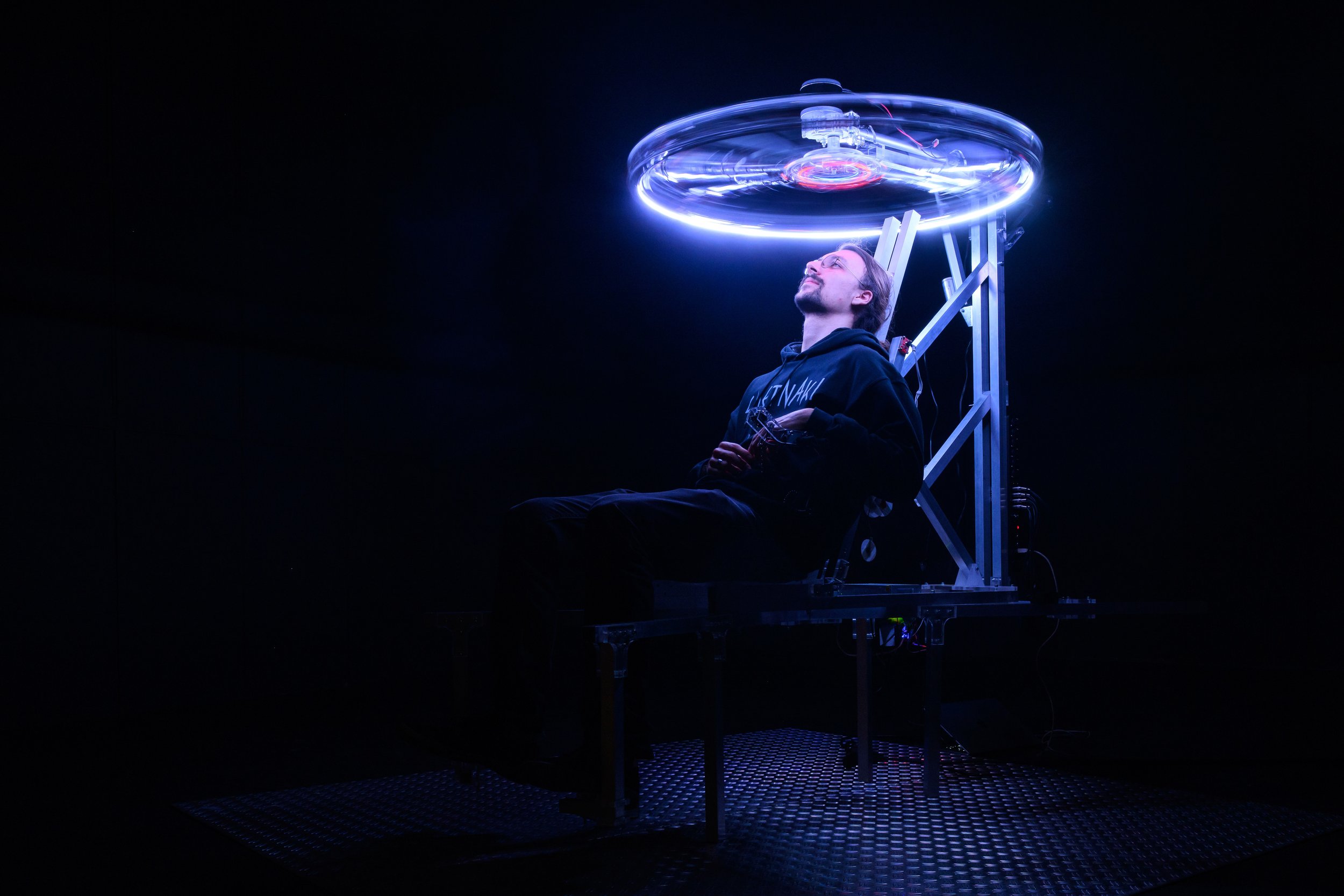
Photo credit: Domen Pal / Kapelica Gallery
As a psychological scientist with a background in human–machine interaction, my contribution was a theoretical one. As I observed the development of the work, I recognised similarities between it and a psycholgoical experience triggered by virtual reality; “simulation sickness” or “cybersickness.” The apparatus Dmitry was building created a mismatch or “incongruency” between visual and auditory cues to induce a sense of disorientation in the participants. That framework gave us a vocabulary for understanding why the machine created disorienting effects in the participants and a foundation in which to consider novel research questions. For example, which specific combinations of modalities may amplify or attenuate “simulation sickness”? How does prior bodily experience - for example from dancers or performance artists - influence susceptibility to “simulation sickness”? Finally, how can psychological research draw inspiration from artistic research to enhance the ecological validity of our experiments?
Furthermore, as I was trained in the embodied cognition tradition, I found that Phasor initially confirmed my assumptions about the necessity of embodiment for cognitive processes. However, the apparatus was also being developed at a moment when large language models were showcasing the possibility of a kind of “cognition,” which is disembodied. Thus, alongside inspiring new research questions, the collaboration prompted me to revisit the role of embodiment for “cognition.”
Images from my visit to the Kersnikova Institute in May 2025, where Phasor was built. Photo credit: Domen Pal / Kapelica Gallery
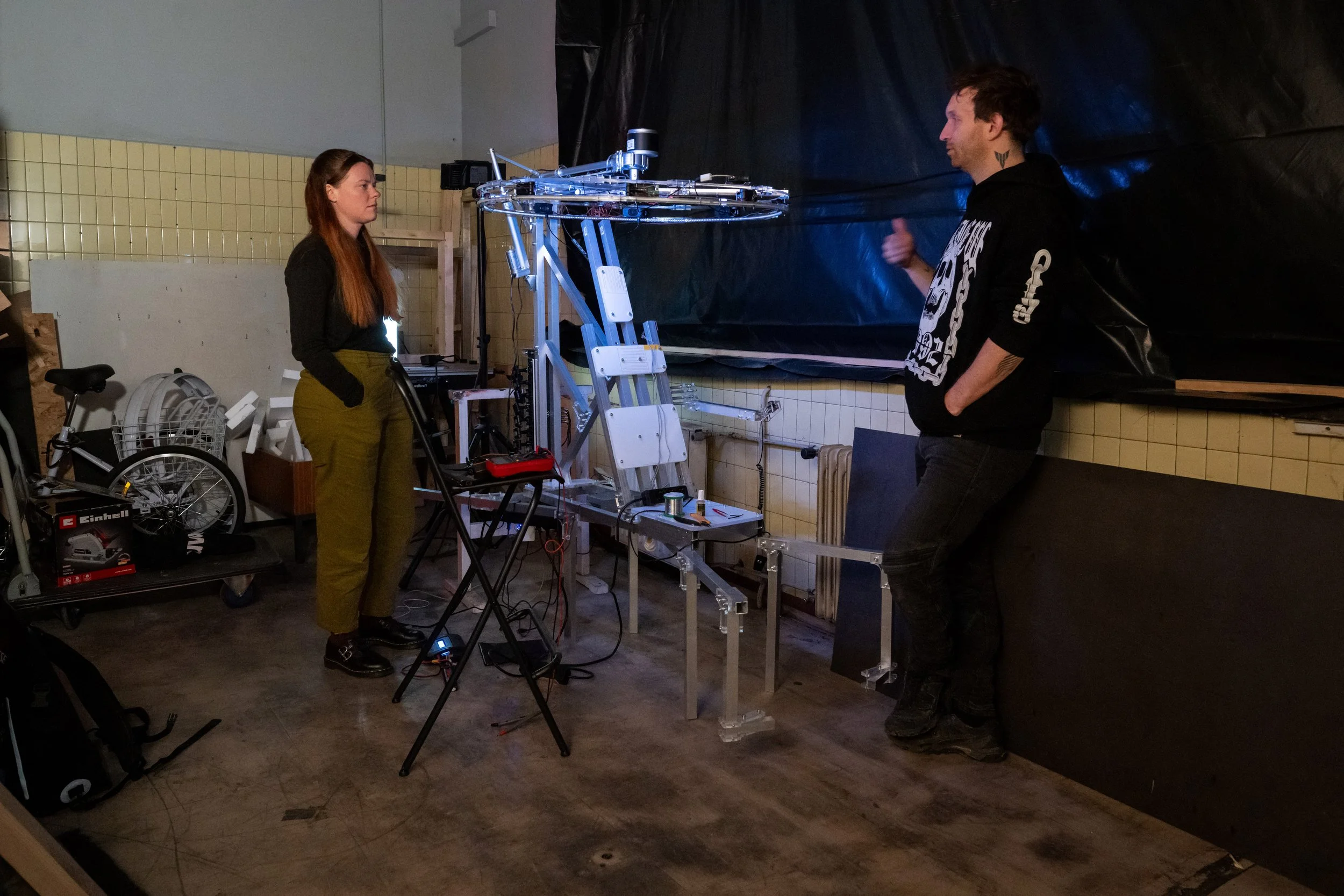
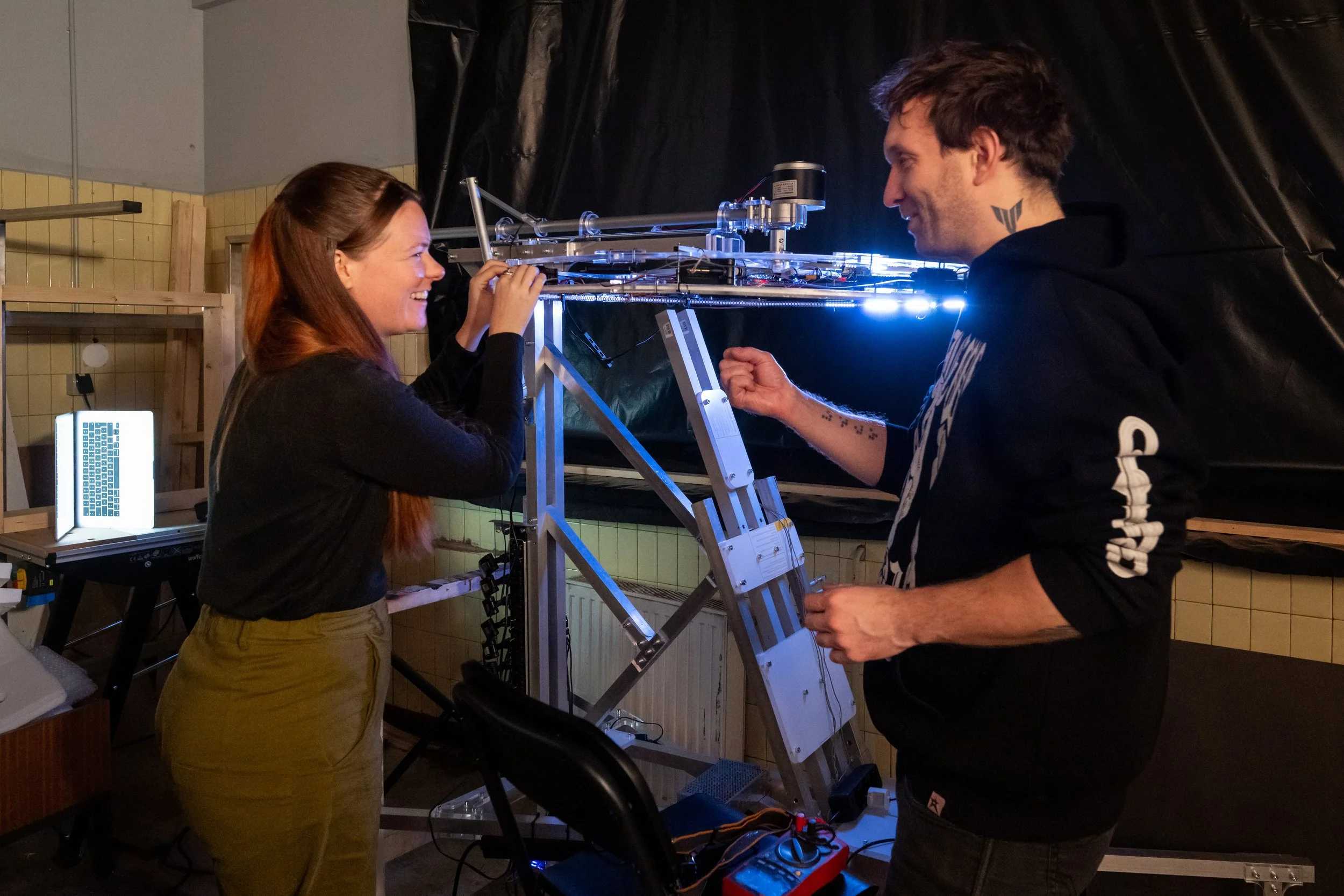
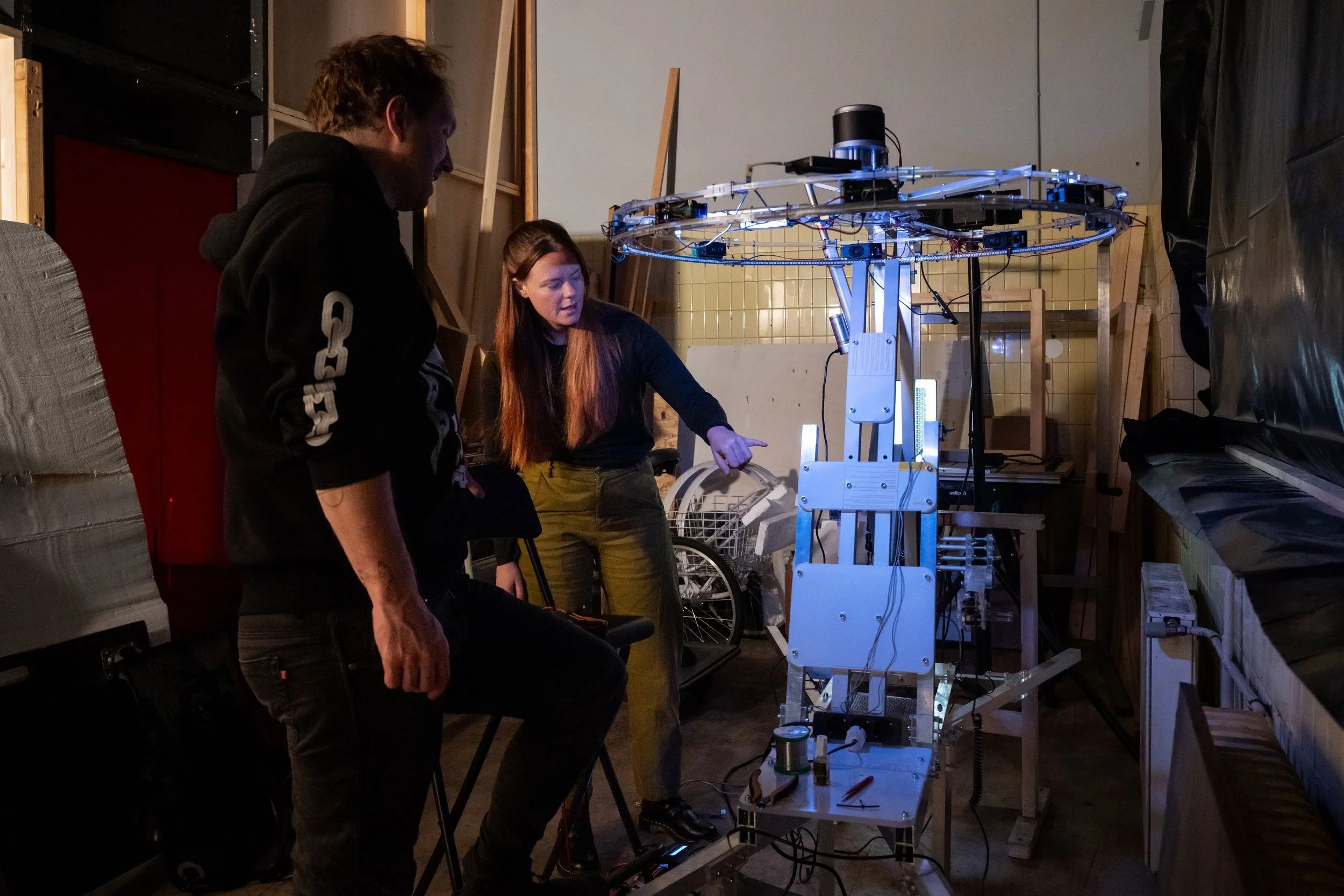
Dmitry Morozov and I’s initial project statements, recorded at in the kick-off meeting at the MEET Digital Culture Center in Milan.
Writing
O'Reilly, Z. (2026). A Reflection from an Art Installation: Revisiting Embodied Cognition in the Age of AI.
Public Events
Funding
This work received funding from the STUDIOTOPIA II residency programme, funded by the European Union under the Creative Europe program (grant agreement 101130939).